
Our Capabilities
Our Capabilities
What We Do
Enabling organizations to move from complex questions to evidence-based decisions and practical, lasting results.
01
Engineering
Engineering solutions grounded in integrated data, advanced engineering and analytics, and clear communication of practical, actionable solutions

PMA-Next applies engineering principles, technical analysis, and data-driven methods to address complex transportation and infrastructure challenges. Our engineering expertise comprises transportation assets condition and performance assessment, materials engineering, transportation systems analysis, asset evaluation, deterioration modeling, and visualization to deliver actionable insights and support strategic infrastructure investment and management decisions.
Leveraging a wide range of engineering and analytical tools and software, our work spans the full data-to-decision process, integrating diverse sources—including field inspections, traffic and climate sensors, materials testing, and historical records—to characterize infrastructure condition and performance, identify performance drivers, and deliver actionable, data-driven engineering solutions.
An example of PMA’s expertise is demonstrated through the civil engineering services provided for Dallas Fort Worth International Airport’s Integrated Operations Center, a complex, mission-critical facility recognized by Engineering News-Record (ENR) as a 2021 Best Airport/Transit Project. As a key member of the project team, PMA supported the delivery of a facility designed to provide 360-degree oversight of airport operations while meeting rigorous requirements for resilience, sustainability, continuous operations, and future infrastructure needs.
02
Performance & Investment Planning
Aligning Performance, Priorities, and Investments to Deliver Measurable Outcomes
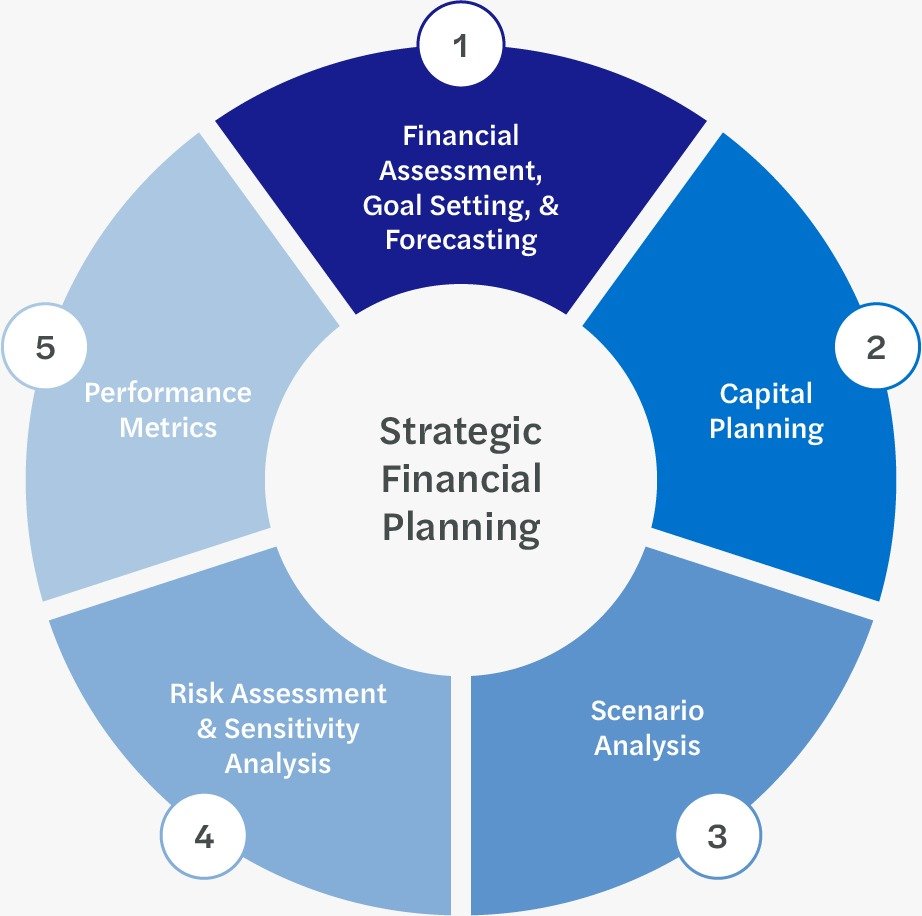
PMA-NEXT brings familiarity with industry-standard transportation analysis tools and data systems, including the Highway Economic Requirements System (HERS), pavement Performance Related Specification (PRS) tools such as PaveSpec, the Pavement Health and Treatment (PHT) Tool, and national infrastructure databases such as the Highway Performance Monitoring System (HPMS) and National Bridge Inventory (NBI). We leverage these and other engineering, asset-management, and decision-support resources to integrate asset-level information with network- and system-level performance, enabling agencies to evaluate needs, deterioration, risks, treatment strategies, costs, and investment outcomes within a consistent analytical framework.
Our approach connects individual assets and projects to broader system-level goals and organizational priorities. Through asset management and strategic planning, we help agencies assess infrastructure needs, prioritize investments, evaluate alternatives and trade-offs, and develop strategies that balance performance, cost, risk, funding availability, operational requirements, and stakeholder priorities. Our performance-based programming approach provides transparent, repeatable, and technically defensible methods for project prioritization, program development, investment selection, funding allocation, and outcome assessment.
By connecting what is performing, what needs to improve, what risks must be managed, what resources are available, and where investments can have the greatest impact, PMA-NEXT helps organizations establish a continuous cycle of performance measurement, needs assessment, planning, prioritization, investment, and improvement. The result is a more transparent, risk-informed, and performance-driven approach to infrastructure management—enabling agencies to make smarter investment decisions, optimize limited resources, and deliver measurable, sustainable, and long-term transportation outcomes.
03
Emerging Technologies
Turning Innovation into Practical, Data-Driven Transportation Solutions
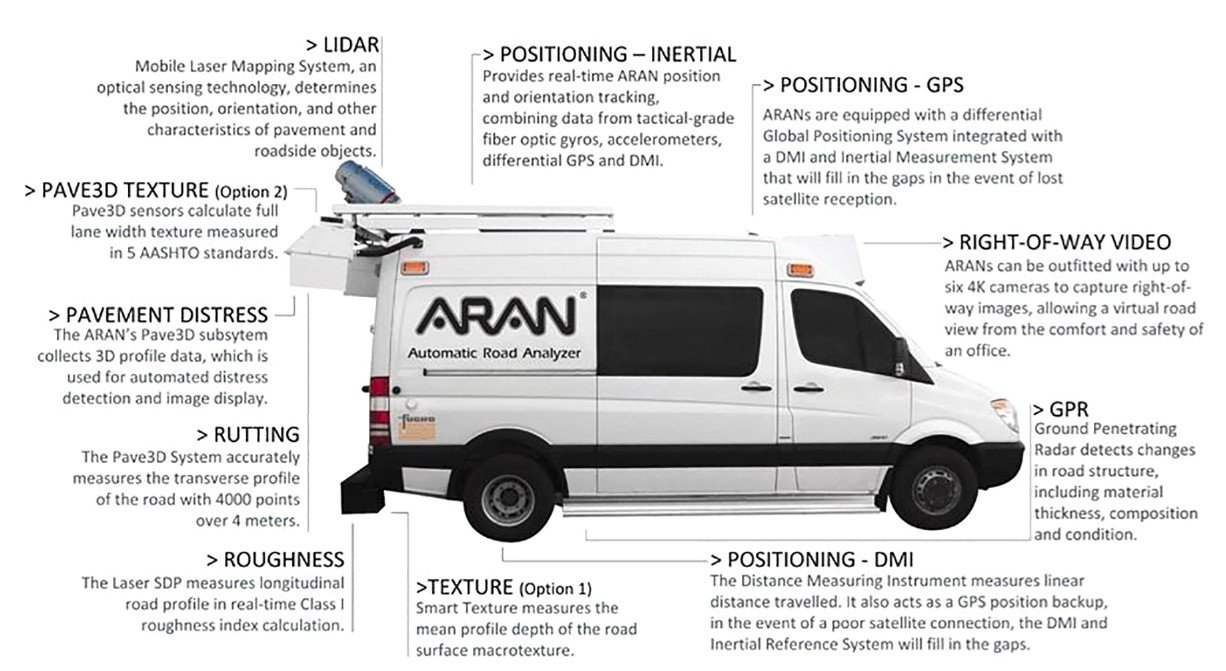
PMA-NEXT helps transportation agencies evaluate, integrate, and apply emerging technologies to improve infrastructure performance, safety, resilience, operations, asset management, and decision-making. A key area of expertise is Next-Generation Nondestructive Evaluation (NDE 4.0), which combines advanced sensing, automation, connectivity, artificial intelligence (AI), and analytics to transform infrastructure condition assessment. Our expertise includes the application of technologies such as ground-penetrating radar (GPR), falling weight deflectometers (FWD), light weight deflectometers (LWD), traffic speed deflectometers (TSD), locked-wheel skid testers (LWST), dynamic friction testers (DFT), circular track meters (CTM), intelligent compaction systems, thermal profilers, thermal imaging, high-resolution imaging, LiDAR 3D scanning, and density measurement technologies to characterize structural and functional properties, including smoothness, friction, distress, temperature and moisture, cracking, density, durability, and other indicators of infrastructure condition and performance.
When NDE 4.0 data are integrated with AI and machine learning (ML), the Internet of Things (IoT), cloud computing, geospatial technologies, and big-data analytics, agencies can move beyond periodic assessment toward continuous monitoring, predictive maintenance, automated condition assessment, and data-driven infrastructure management. PMA-NEXT helps organizations assess how these technologies can be integrated with existing infrastructure, data systems, and business processes to create practical, scalable solutions. By combining transportation engineering, infrastructure expertise, NDE 4.0, advanced sensing, analytics, and systems thinking, PMA-NEXT helps agencies move from innovation to practical implementation. We enable informed decisions about when, where, and how emerging technologies can deliver measurable improvements in safety, performance, efficiency, resilience, and long-term infrastructure value.
04
Economic Analysis
Connecting engineering, economics, risk, and investment to better transportation decisions
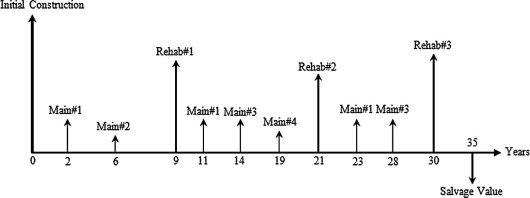
PMA-NEXT integrates engineering data, asset performance, costs, benefits, risks, and funding considerations to quantify the economic implications of transportation decisions and provide a rigorous basis for prioritizing investments and allocating limited resources. Our capabilities include life-cycle cost analysis (LCCA), benefit-cost analysis (BCA), cost-effectiveness analysis, economic impact assessment, financial and investment analysis, risk and uncertainty analysis, project and program evaluation, funding and financing analysis, and investment prioritization. We consider the full lifecycle of an investment, including capital, maintenance, rehabilitation, operations, user impacts, asset performance, residual value, and other factors affecting long-term economic value.
PMA-NEXT performs LCCA and BCA to compare alternative designs, treatment strategies, project timing, rehabilitation approaches, investment programs, and funding scenarios. We develop and fit appropriate cost and economic models, evaluate relationships among infrastructure use, condition, performance, and cost, and estimate marginal costs of infrastructure use, including incremental impacts associated with changes in traffic or loading. Where appropriate, we integrate economic analysis with engineering, deterioration, and performance models to connect physical infrastructure outcomes with their financial and economic consequences. We incorporate risk, uncertainty, and changing future conditions to evaluate alternative strategies and their implications for costs, benefits, system performance, and long-term asset value. We also help agencies assess funding gaps, evaluate investment scenarios, and align available resources and financing mechanisms with desired performance outcomes.
By combining transportation engineering, asset performance, economics, and quantitative modeling, PMA-NEXT delivers life-cycle cost and benefit-cost assessments, marginal cost analyses, economic and financial evaluations, cost models, funding strategies, scenario analyses, and decision-support tools. These capabilities help agencies understand investment value, risks, and trade-offs and make transparent, economically sound decisions that maximize long-term transportation outcomes and public value.
05
Advanced Analytics
Transforming Complex Transportation and Infrastructure Data into Insights, Predictions, and Better Decisions
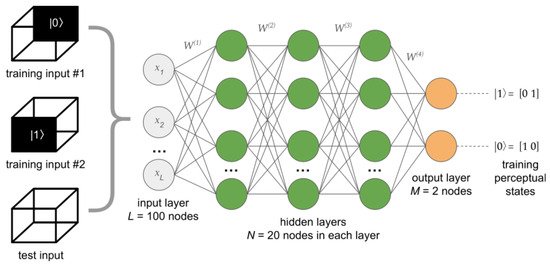
PMA-NEXT is familiar with advanced statistical, computational, and data-science methods for transforming complex transportation and infrastructure data into actionable insights, predictive intelligence, and better decisions. Our expertise encompasses diverse information sources, including inspections, sensors, surveys, infrastructure inventories, agency records, traffic and environmental data, and other datasets, to support the identification of patterns and relationships, characterization of current conditions, forecasting of future performance, and evidence-based decision-making. Our capabilities include familiarity with statistical analysis, predictive modeling, artificial intelligence (AI) and machine learning (ML), data mining, pattern recognition, forecasting, classification and clustering, natural language processing, deterioration modeling, and risk and probability analysis. We understand how to select and apply analytical methods based on data characteristics and specific engineering or management challenges, including the use of complementary techniques to address complex relationships, uncertainty, and changing infrastructure and transportation conditions.
PMA-NEXT is familiar with advanced approaches for incorporating climate impacts into pavement distress initiation, propagation, and management. These approaches include correlation analysis, principal factor analysis, cluster analysis, and decision-tree methods for transforming large volumes of high-resolution climate data into pavement-specific climate regions. Such methodologies provide an evidence-based means of identifying areas with similar climatic effects on pavement performance and supporting assessment of climate-related deterioration, risk, and mitigation strategies. We are also familiar with analytical methodologies for characterizing highway network health and identifying patterns in current and future asset performance. These approaches include data preprocessing, normalization, entropy-based weighting, composite health indices, salient-feature extraction, and cluster analysis to transform large volumes of condition data into meaningful performance classifications and network-level insights. The resulting information can support executive-level maintenance planning, resource allocation, and investment decisions.
PMA-NEXT emphasizes analytical rigor, interpretability, validation, and practical application. We understand the importance of developing, testing, and validating models using appropriate datasets and performance measures; assessing sensitivity, uncertainty, and model limitations; and translating analytical results into clear information that engineers, managers, and decision-makers can understand and use. By combining familiarity with advanced analytics, engineering judgment, and transportation domain expertise, PMA-NEXT helps agencies evaluate predictive models, forecasts, risk assessments, analytical methodologies, and decision-support tools that can improve understanding of complex conditions, anticipation of future outcomes, prioritization of interventions, management of uncertainty, and infrastructure and transportation decision-making.
06
Data Visualization
Making complex infrastructure data clear, meaningful, and actionable

PMA-NEXT integrates diverse transportation and infrastructure data, including surveys and inspections, traffic and environmental sensors, agency and asset records, geospatial datasets, financial and program data, and analytical and predictive models. We leverage industry-standard platforms such as SAS, Excel, Tableau, Power BI, ArcGIS, Python, R, and SQL to integrate, analyze, and visualize complex datasets, transforming information from multiple sources into consistent, decision-ready intelligence. These capabilities enable us to assess asset condition, system performance, deterioration, risks, needs, and program outcomes across asset, project, network, and system levels.
Through dashboards, maps, visual analytics, and targeted reports, PMA-NEXT helps engineers, asset managers, program managers, and executive decision-makers identify performance trends, assess emerging needs and risks, evaluate alternatives and trade-offs, and understand the potential impacts of different investment strategies. We connect data and analytics to practical decision-making, helping agencies translate information into targeted maintenance, preservation, rehabilitation, reconstruction, and investment strategies that align performance objectives, available resources, operational requirements, and long-term priorities.
Our analytical methods support data validation and quality control, development of condition and performance measures, trend and deterioration analysis, risk assessment, forecasting, geospatial analysis, and evaluation of treatment and investment alternatives. We use these analyses to identify current and projected infrastructure needs, quantify performance gaps, estimate the effects of alternative strategies, and evaluate costs and expected outcomes. By linking asset-level data with network and program performance, PMA-NEXT provides agencies with a technically defensible basis for project prioritization, treatment selection, investment planning, funding allocation, and performance monitoring.